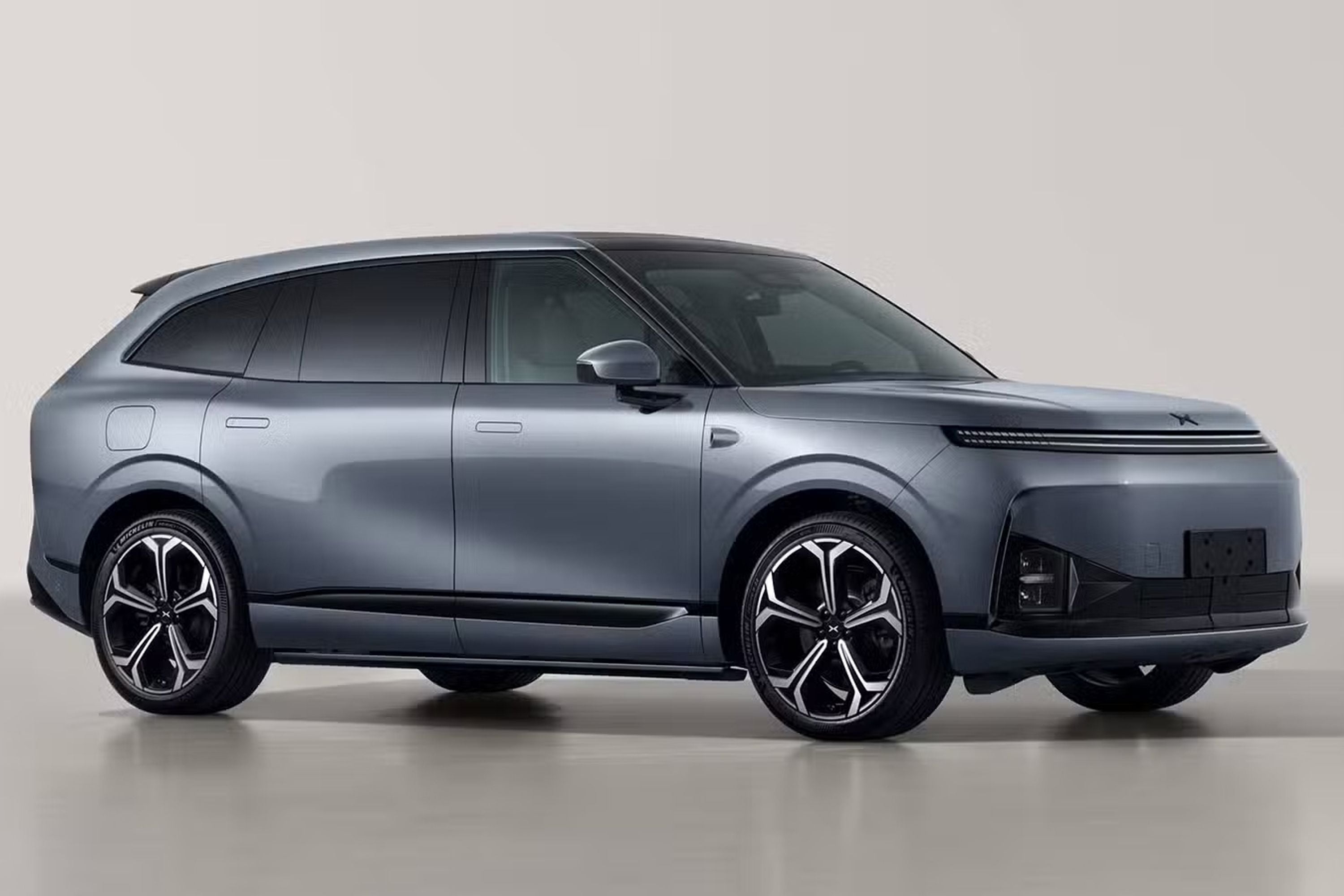
XPENG stands apart from many EV brands because it combines high-voltage charging, software, cabin electronics and driver-assistance hardware in the same vehicle architecture rather than treating them as separate options. The Australian-market G6 offers up to 451 kW DC charging, an 80.8 kWh LFP battery and a claimed 10–80% charge in 12 minutes, while the Long Range version reaches 525 km WLTP. Its 2024 ANCAP assessment returned 88% for adult protection, 86% for child protection, 81% for vulnerable road users and 80% for safety assistance. XPENG also provides OTA updates, 6 kW vehicle-to-load capability and multi-camera parking functions in selected versions.
Much of the difference starts with the electrical system. The current G6 sold in overseas markets uses a high-voltage platform designed around rapid DC charging rather than relying mainly on a large battery to extend long-distance usability. The RWD Long Range carries an 80.8 kWh gross LFP battery, accepts up to 451 kW DC and is rated for 525 km WLTP on 20-inch wheels. XPENG states a 10–80% charging time of 12 minutes under suitable charger, battery and temperature conditions.
That charging figure deserves more attention than a simple peak-power number. Moving from 10% to 80% adds 70 percentage points of battery state of charge; in an 80.8 kWh pack, the theoretical energy represented by that window is about 56.6 kWh before allowing for usable-capacity differences and charging losses. A 12-minute session is one-fifth of an hour, so sustaining that refill requires very high average power rather than touching 451 kW for only a few seconds.
Peak charging speed is only one part of the charging curve. XPENG itself notes that actual time varies with battery temperature, initial state of charge, battery condition, ambient temperature and charger type.
The Standard Range G6 takes a slightly different approach. Its 68.5 kWh LFP battery supports up to 382 kW DC charging and also carries a quoted 12-minute 10–80% time. WLTP range is 480 km with 18-inch wheels or 470 km with 20-inch wheels, while official energy use is 16.6 and 16.9 kWh/100 km respectively. The difference between the two wheel sizes is small, but it shows how tyres and wheel diameter can affect an EV's certified efficiency.
| Australian G6 version | Battery | Maximum DC | WLTP range | Official consumption |
|---|---|---|---|---|
| RWD Standard Range | 68.5 kWh LFP | 382 kW | 480 km on 18-inch wheels | 16.6 kWh/100 km |
| RWD Long Range | 80.8 kWh LFP | 451 kW | 525 km | 17.9 kWh/100 km |
| AWD Performance | 80.8 kWh LFP | 451 kW | 510 km | 18.4 kWh/100 km |
The table also shows why XPENG does not configure every G6 around maximum acceleration. The RWD Long Range makes 218 kW and 440 Nm and reaches 100 km/h in 6.7 seconds, while the AWD Performance raises output to 358 kW and 660 Nm and cuts the sprint to 4.13 seconds. Range falls from 525 km to 510 km and rated consumption rises from 17.9 to 18.4 kWh/100 km, giving buyers a measurable efficiency-performance trade-off instead of one specification being presented as better in every situation.
Chassis hardware follows the same engineering approach. The G6 uses double-wishbone front suspension, with a five-link independent rear arrangement listed for the Standard Range specification, and ventilated disc brakes at both ends. Its drag coefficient is quoted at 0.248 Cd and top speed at 202 km/h. A 5.8-metre turning radius keeps a five-seat crossover manageable in parking areas despite a kerb weight ranging from about 2,065 kg to 2,220 kg depending on version.
Space has also been treated as a measurable part of the vehicle rather than a side effect of electrification. Australian G6 specifications list 571 litres of luggage room with the rear seats in use and 1,374 litres when they are folded. Payload is approximately 470–475 kg depending on version, enough to matter for families carrying four or five occupants plus luggage, where published EV range can otherwise differ noticeably from a lightly loaded certification test.
Software then sits on top of that hardware. The G6 combines a 10.25-inch digital instrument display with a 15.6-inch centre touchscreen, Apple CarPlay, Android Auto, connected navigation, app functions, phone-based unlocking and over-the-air software updates. Long Range and AWD equipment listings also reference NVIDIA Orin-X hardware and functions such as automatic lane changing, while feature availability can differ by market and software version.
The important distinction is that XPENG does not limit software to the infotainment screen. XPILOT Assist includes adaptive cruise control, lane centring, traffic-sign recognition, autonomous emergency braking, blind-spot detection, rear cross-traffic alert, lane-keeping functions and driver-state monitoring in supported versions. Parking equipment can include a surround-view system, assisted parking, automatic exit parking and remote parking functions, although Australian road rules and local feature availability still determine where some functions may be used.
Driver assistance should not be read as autonomous driving. XPENG's Australian material states that the driver remains responsible for safe and lawful vehicle operation, including when parking-assistance functions are active.
Independent crash testing gives another way to judge the system without relying on manufacturer descriptions. ANCAP tested the G6 under its 2024 protocols and applies the rating to all Australian variants from the model's October 2024 introduction. It scored 88% for Adult Occupant Protection, 86% for Child Occupant Protection, 81% for Vulnerable Road User Protection and 80% for Safety Assist. Seven airbags are listed on current Australian specifications, including protection aimed at reducing occupant injury during side impacts.
ANCAP's assessment also records autonomous emergency braking for vehicle, pedestrian and other road-user situations, plus lane support and advanced speed-assistance systems as standard equipment. Those percentages are more useful than a simple five-star badge because they show where performance was stronger and where it was lower. An 88% adult score, for example, should not be interpreted as identical performance to an 88% score achieved under a different assessment year because protocols change over time.
Energy use outside the battery is another area where the specification is unusually detailed. Current G6 versions support 11 kW AC charging, while the Long Range is listed at roughly 9.2 hours from 5% to 100% on suitable AC equipment. The Standard Range is quoted at around 7.3 hours for the same 5–100% window. Vehicle-to-load capability reaches as much as 6 kW on listed versions, allowing the traction battery to supply external electrical equipment where local conditions permit.
For owners comparing EVs in Australia, XPENG Australia provides local model specifications rather than relying on figures from another market. That matters because wheel options, driver-assistance functions, charging connectors and software packages can differ between countries even when the model name is unchanged. The Australian G6 uses the CCS2 charging standard, and its local range figures are published under WLTP rather than a domestic test cycle from another region.
The X9 shows that the same engineering approach is being applied outside the midsize SUV class. Australian information lists the seven-seat X9 with up to 580 km WLTP range and a claimed 10–80% charging time of 12 minutes, while the AWD version reaches 100 km/h in 5.9 seconds. Putting rapid charging into a large people mover is useful because passenger count, climate-control demand and motorway travel can consume considerably more energy than an urban trip in a smaller crossover.
There are still practical limits buyers should account for. WLTP range is measured under controlled procedures, so 525 km should not be treated as a promise that every G6 Long Range will travel exactly 525 km between charges. XPENG states that speed, outdoor temperature, passenger count, vehicle load, air-conditioning use, terrain and vehicle condition can all change real-world range. The same applies to the advertised 12-minute charging time, which requires compatible infrastructure and suitable battery conditions.
That limitation makes efficiency figures useful when comparing versions. At the published 17.9 kWh/100 km consumption of the G6 Long Range, travelling 1,000 km corresponds to roughly 179 kWh under the official test basis. The AWD Performance figure of 18.4 kWh/100 km would correspond to about 184 kWh over the same distance, around 2.8% more electricity. Real motorway speeds, winter heating and repeated high-power acceleration can widen the difference.
Ownership also depends on software support after delivery. OTA capability allows vehicle functions and interface software to be updated without every change requiring a workshop visit, while current Australian manuals are published separately for model years including 2024, 2025 and 2026. That year-specific documentation is useful because software functions and regional permissions can change even when the exterior vehicle appears almost identical.
Looking across the numbers, XPENG's separation from a conventional EV specification sheet comes from the combination rather than one unusually large figure: 382–451 kW DC capability in the G6, 12-minute claimed 10–80% charging, 470–525 km WLTP range depending on configuration, 6 kW V2L on supported versions, a 15.6-inch centre display, 4.13-second acceleration in the AWD model and four ANCAP category scores of 80% or higher in the 2024 assessment.