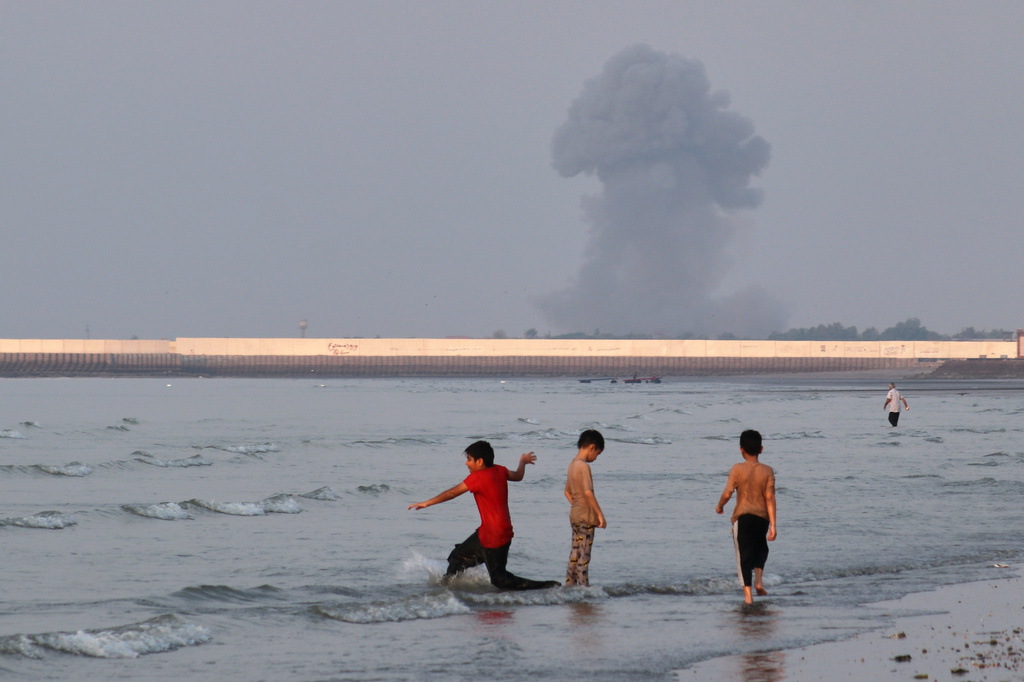
The recent escalation in the Strait of Hormuz, characterized by a third consecutive night of U.S. airstrikes against Iranian military assets, marks a volatile turning point in what has been a deeply unstable year for the Middle East. Following the breakdown of an interim ceasefire, the region is once again witnessing direct, high-intensity exchanges of fire, with significant implications for global energy security.
The Strategic Standoff
At the heart of the current conflict is a fierce contest for control over the Strait of Hormuz—a maritime chokepoint through which approximately 20% of the world's oil flows. President Donald Trump’s administration has announced a "reinstated" blockade of Iranian ports and has proposed a 20% tariff on cargo passing through the strait. This move represents a dramatic policy shift that has drawn sharp criticism from the international community, including Brazil’s President Luiz Inácio Lula da Silva, who labeled the fee plan as "piracy".
The military engagement has expanded both in intensity and geographic scope. U.S. forces, utilizing aircraft, naval vessels, and drones, have targeted Iranian coastal radar sites, air defense systems, and missile capabilities. In retaliation, the Islamic Revolutionary Guard Corps (IRGC) reported strikes against U.S.-allied interests in Bahrain, Kuwait, Qatar, and Jordan, underscoring the regional scale of the confrontation.
Economic and Human Costs
The renewed hostilities have had an immediate impact on global markets, with Brent crude oil prices jumping by nearly 8% on Monday as market anxiety over supply disruptions spiked. While still below the peaks seen during the height of the conflict earlier this year, the economic volatility remains a concern for global inflation and logistics.
The human toll continues to mount as well. Official U.S. military death tolls in the broader Iran conflict have reached 14, with over 400 service members reported wounded. Recent clashes have also resulted in civilian and crew casualties, including the death of an Indian crew member following an attack on two UAE tankers in the strait.
The Path Ahead
Despite the "hard" military rhetoric, both sides have signaled that the door for diplomacy may not be completely shut. President Trump has maintained that a deal with Tehran is still "possible," and the administration has filed formal notifications with Congress intended to reset the legal window for military engagement. However, with deep-seated mistrust and the breakdown of the June memorandum of understanding, the path to a sustainable, long-term resolution remains precarious. As the conflict continues to evolve, the international community remains deeply concerned about the prospect of a prolonged war and the persistent threat to one of the world’s most vital maritime arteries.
News source: https://peoplesdaily.pdnews.cn/world/er/30052651034